What Is Biochar and How Is It Made
What Is Biochar?
Biochar is a charcoal-like substance produced by heating organic biomass—such as agricultural waste, wood chips, or manure—in a low-oxygen environment. While it looks similar to common charcoal, biochar is specifically produced for use as a soil amendment or for carbon sequestration.
Unlike wood that is burned or left to rot (which releases carbon dioxide back into the atmosphere), biochar "locks" carbon into a stable, solid form. When added to soil, it can remain there for hundreds or even thousands of years, making it a powerful tool for climate change mitigation.
How Biochar Is Made: The Pyrolysis Process
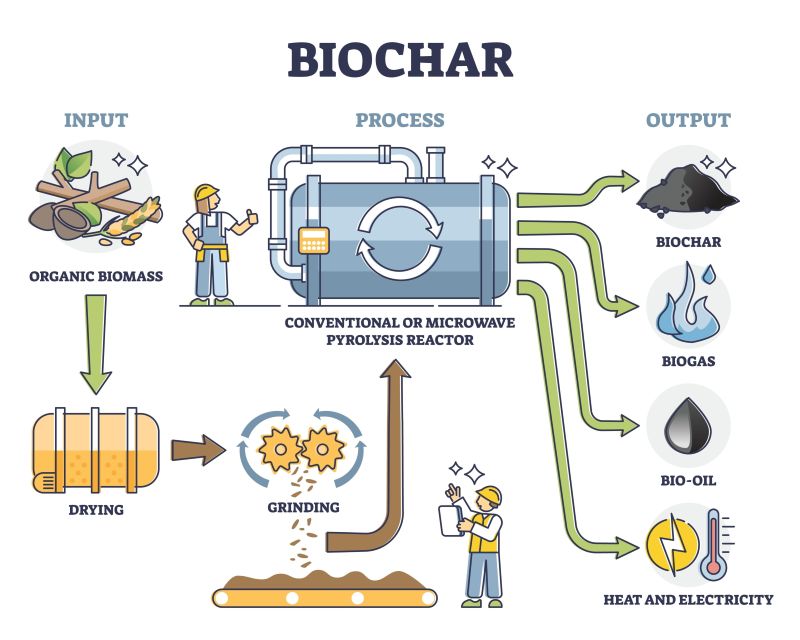
The primary method for creating biochar is pyrolysis. This is the chemical decomposition of organic material through the application of heat in the absence of oxygen.
1. Feedstock Preparation
First, organic waste (feedstock) is collected. Common materials include:
Crop residues (corn stalks, rice husks).
Forestry waste (sawdust, fallen branches).
Animal manure.
Green waste from landscaping.
The material is usually dried and shredded to ensure even heating during the process.
2. The Pyrolysis Chamber
The feedstock is placed into a reactor or kiln. As the temperature rises, the organic matter undergoes several stages:
Drying ($<200$°C): Remaining moisture is evaporated.
Torrefaction ($200$–$300$°C): The biomass begins to break down, releasing some volatiles.
Exothermic Carbonization ($>300$°C): The main chemical structure of the biomass breaks down, leaving behind a carbon-rich skeleton.
Shutterstock
3. Byproducts
Pyrolysis typically yields three distinct products:
Biochar: The solid, porous carbon residue.
Bio-oil: A liquid that can be refined into biofuels.
Syngas: A mixture of hydrogen, methane, and carbon monoxide that can be burned to provide the heat for the pyrolysis process itself.
Why Is Biochar Useful?
Biochar is valued because of its unique physical and chemical properties:
High Porosity: It acts like a microscopic sponge, providing a massive surface area that holds onto water and nutrients, preventing them from leaching out of the soil.
Microbial Habitat: The tiny pores offer a "home" for beneficial soil microbes and fungi to thrive.
Carbon Sequestration: It effectively removes carbon from the short-term biological cycle and stores it long-term.
Waste Management: It turns problematic organic waste (like manure or crop residue) into a valuable resource.
Types of Pyrolysis
The quality and yield of biochar depend on the speed and temperature of the process:
| Type | Temperature | Speed | Primary Product |
| Slow Pyrolysis | ~$400$–$500$°C | Hours to Days | Biochar (High Yield) |
| Fast Pyrolysis | ~$500$–$1000$°C | Seconds | Bio-oil (High Yield) |
| Gasification | $>800$°C | Seconds | Syngas (High Yield) |
 Sales
Sales